What is Amazon Haul? Amazon's Answer to Temu [2026]
What Amazon Haul is, how shipping and returns work, where it's available in 2026, and whether sellers can list on it, compared with Temu and Shein.
What Amazon Haul is, how shipping and returns work, where it's available in 2026, and whether sellers can list on it, compared with Temu and Shein.
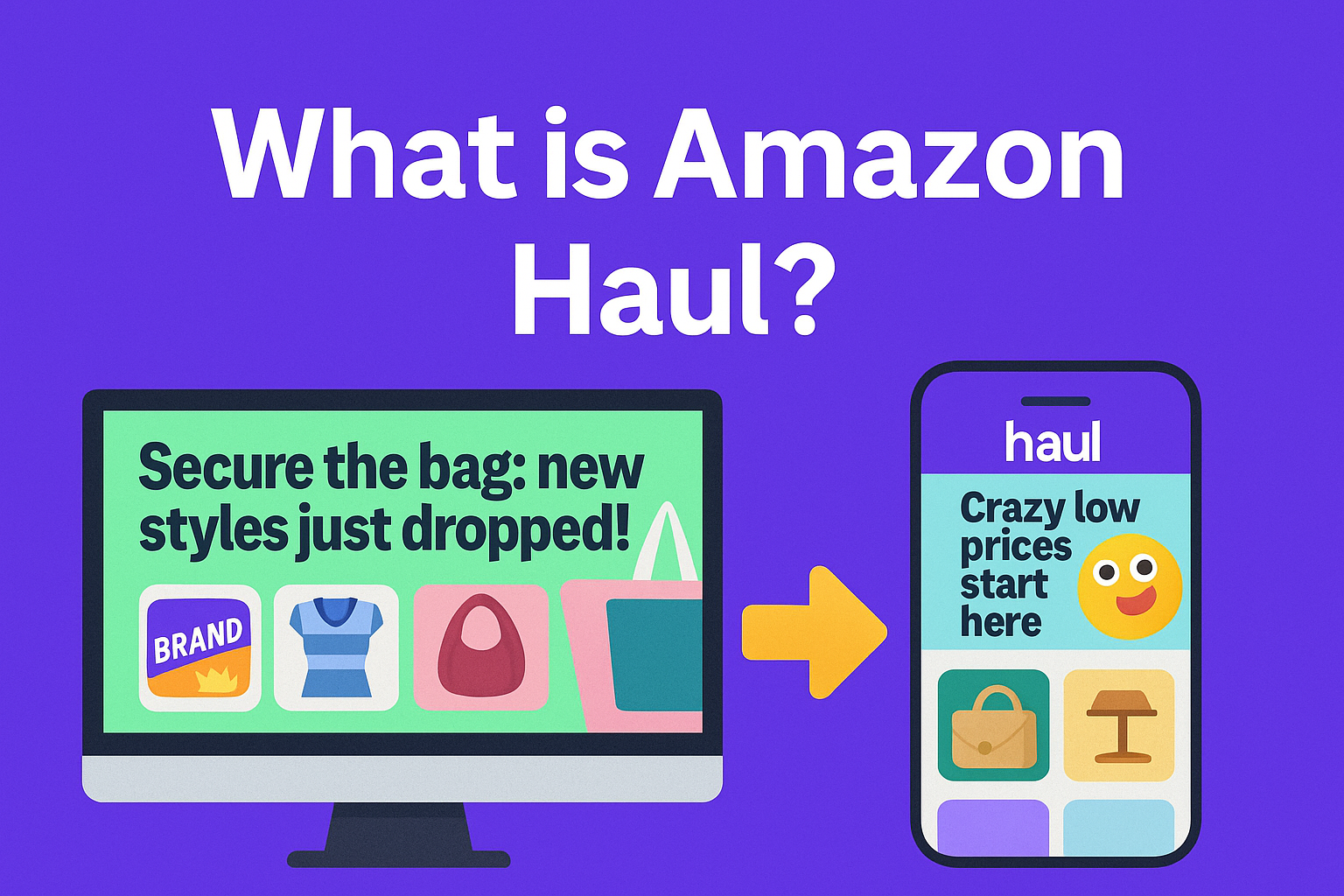
Amazon’s Haul store is Amazon’s direct answer to Temu and Shein: a dedicated “$20 & under” shopping experience launched in November 2024 inside the Amazon mobile app and now live in more than 25 markets worldwide (under both the Haul and Amazon Bazaar names). Most Haul items sit under $10, ship directly from vetted suppliers (largely in China), and arrive in about one to two weeks rather than the next day. Prime isn’t required. This guide covers what Amazon Haul is today in 2026, how shipping and returns work for shoppers, where it’s available, how the 2026 end of the US de minimis tariff exemption changed its pricing, how it compares with Temu and Shein, and the question every ecommerce merchant asks: can I sell on Amazon Haul?
An “Amazon haul” refers to the trend where shoppers purchase a bundle of affordable items from Amazon and share their “haul” online through videos or posts. These hauls are often showcased on TikTok, Instagram, and YouTube, generating excitement around the products and the deals shoppers found.
Amazon embraced this trend officially by highlighting affordable finds and creating dedicated spaces to showcase “hauls.” Unlike a regular shopping spree, an Amazon haul is often about the thrill of discovery by scoring multiple useful, cute, or trendy items at budget-friendly prices.
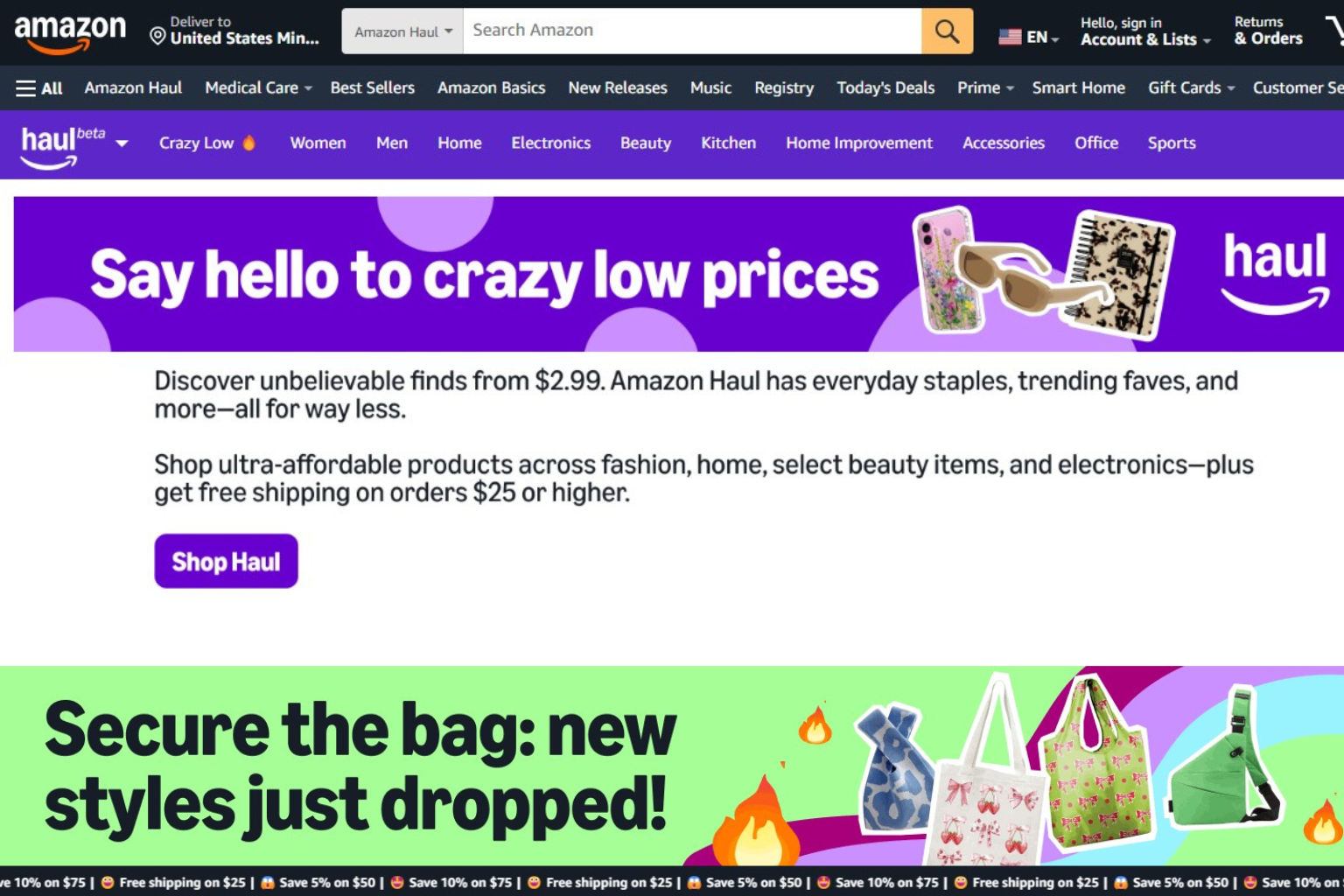
The Amazon haul phenomenon taps into powerful emotional drivers. Shoppers love the feeling of getting “more for less,” and Amazon’s $20 & Under storefront perfectly feeds that urge. Customers browse curated deals, bestsellers, and “cheap things on Amazon” which leads to spontaneous buying.
Amazon hauls are also highly entertaining. Watching someone unpack a dozen exciting finds builds anticipation and trust. With influencers pushing haul videos, Amazon gets organic marketing while satisfying shoppers’ desire for both value and variety.
To capitalize on this viral trend, Amazon introduced several initiatives:
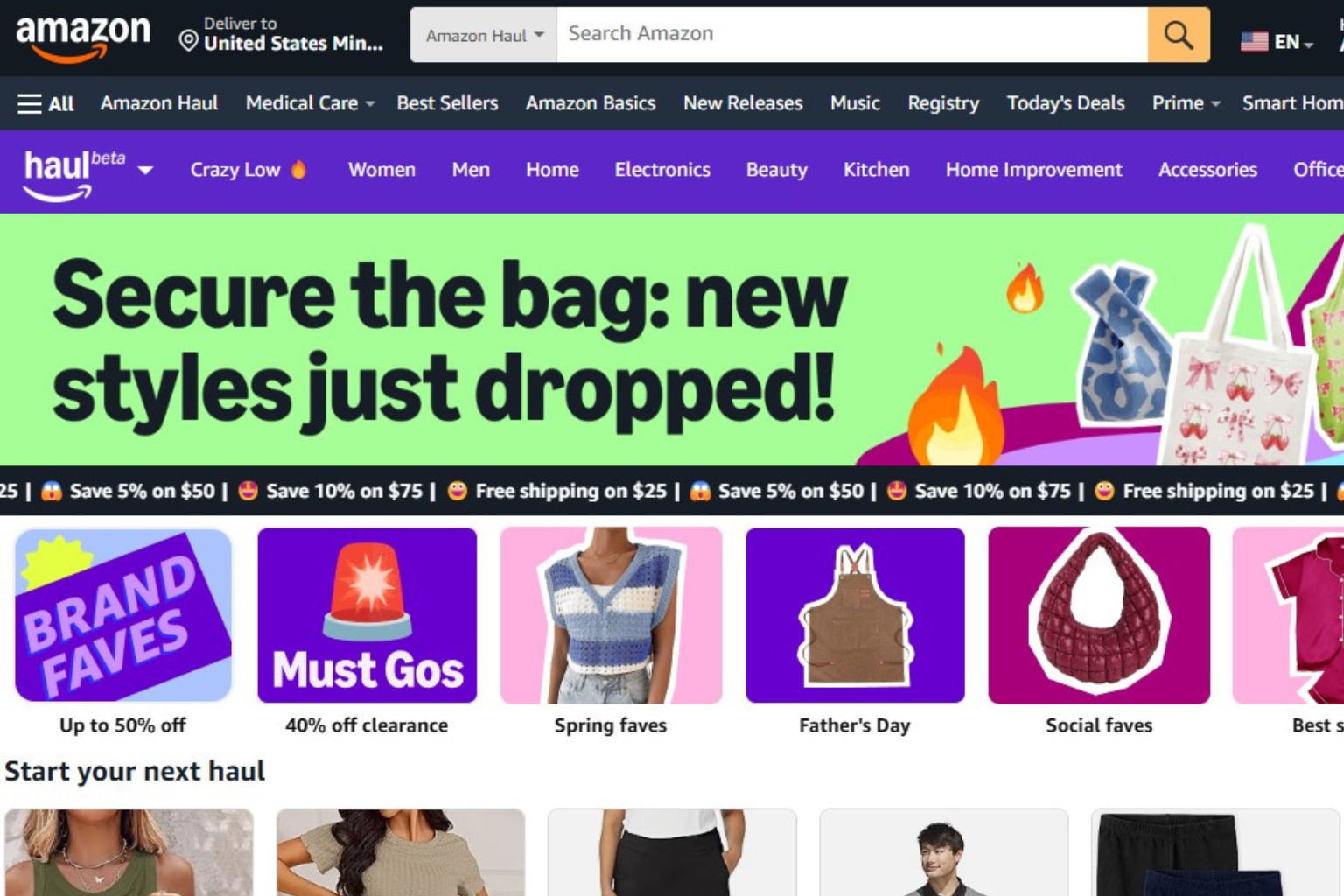
A dedicated shopping section designed specifically for bargain hunters. This store highlights products that are low-cost, trendy, and perfect for customers looking to create their own “hauls.” Items featured here are curated to appeal to the budget-conscious shopper, with categories often emphasizing $20 & under deals, making it easier for users to find affordable products quickly and share their purchases socially.
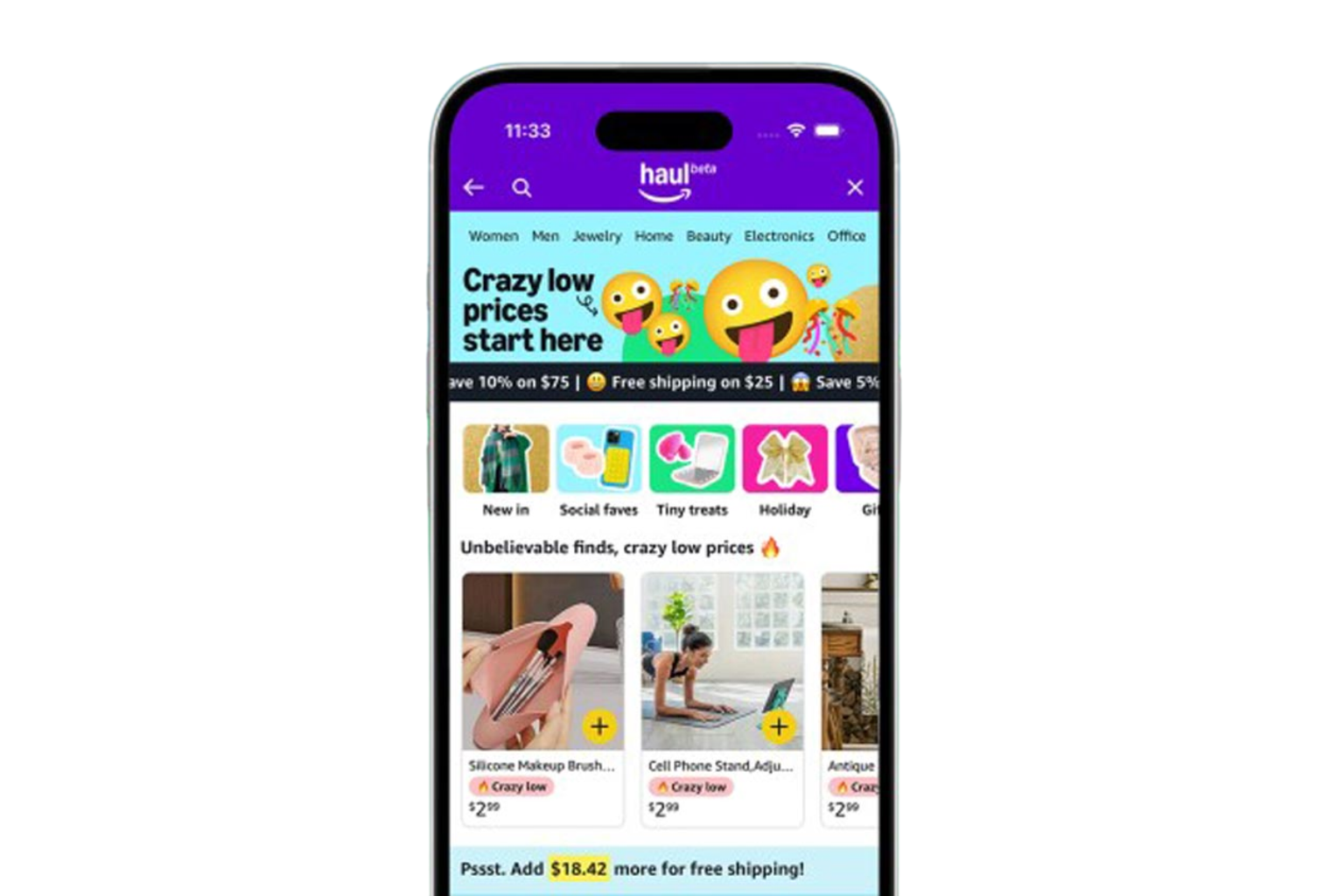
A mobile-first application that delivers a smooth, scrollable experience similar to apps like Temu and Shein. The Amazon Haul App is designed to make browsing low-cost items fast and addictive, with an emphasis on visually-driven discovery rather than traditional search. It encourages spontaneous shopping by showcasing endless deals, creating a frictionless “add-to-cart” experience directly on mobile devices.
These moves show that Amazon isn’t just reacting, but actively trying to redefine affordable shopping within its platform, keeping up with changing customer behaviors.
Amazon Haul launched in November 2024 as a US-only, mobile-first experience inside the main Amazon shopping app. A year on it has expanded fast: by 2026 the Haul experience reaches more than 25 markets, and Amazon has begun removing the “beta” label globally. In several regions the same ultra-low-price storefront runs under a sister brand, Amazon Bazaar (shown as “Bazar” in the app), which Amazon rolled out to 14 additional countries in November 2025.
| Region | Status (2026) | Brand |
|---|---|---|
| United States (amazon.com) | Fully live, app + web | Haul |
| UK, Germany, France, Italy, Spain | Live | Haul |
| Japan, Australia | Live | Haul |
| Mexico, Saudi Arabia, UAE | Live | Amazon Bazaar |
| Philippines, Hong Kong, Taiwan | Live (Nov 2025 rollout) | Amazon Bazaar |
| Argentina, Peru, Ecuador, Costa Rica, Dominican Republic, Jamaica | Live | Amazon Bazaar |
| Bahrain, Kuwait, Oman, Qatar, Nigeria | Live | Amazon Bazaar |
| Singapore, Malaysia, Thailand, Vietnam, Indonesia | Not launched | — |
The catalogue has grown with the footprint. Amazon says over a million items are priced under $10 on Haul, with many under $5 and fast growth in the under-$3 tier. Because Haul (and Bazaar) is a storefront rather than a separate company, availability depends on both the Amazon marketplace you log into and whether Amazon has switched the module on for that market. If you don’t see the Haul or Bazaar tab in your Amazon app, it is not yet live where you are.
Two things matter for sellers here. First, the experience is now genuinely global rather than a US curiosity. Second, most of Southeast Asia still has no Haul or Bazaar storefront: the Philippines is the lone SEA market live (under Amazon Bazaar, from the November 2025 rollout), while Singapore, Malaysia, Thailand, Vietnam, and Indonesia continue to rely on Temu, Shopee, and Lazada. The full launch list and item counts are published on Amazon’s own newsroom.
Actionable Insight: If you’re a seller in Southeast Asia watching the Haul rollout, don’t wait. The most likely near-term Haul supply chain continues to come from China-based manufacturers via invitation. Building your Temu store and multichannel presence now — across Shopee, Lazada, and TikTok Shop — is the realistic play, not queuing up for a Haul seller program that may never open to third-party applicants.
A lot of the confusion around Amazon Haul comes down to one question: how is this different from regular Amazon? For shoppers in 2026, here’s how the Haul experience actually works.
Amazon Haul prices sit almost entirely at or below $20, with the bulk of the catalogue priced under $10. The assortment skews toward:
Higher-ticket Amazon products, branded goods, and Prime-eligible fast-shipping listings are not part of Haul. It’s a separate inventory stream curated for discovery shopping rather than planned purchases.
Because most Haul items ship directly from overseas fulfilment points (largely China-based manufacturers), delivery takes roughly 1 to 2 weeks — not the 1–2 day speed Amazon Prime trained shoppers to expect. In return, Amazon currently offers free standard shipping on Haul orders of about $25 or more, with a small flat fee on smaller baskets. Faster shipping upgrades are available in some markets for an additional fee.
Amazon Haul operates a 15-day return window — tighter than Amazon’s standard 30-day policy. Returns are free on items priced above roughly $3; below that price point, Amazon typically lets you keep the item and issues a refund rather than pay return shipping. This mirrors the low-value returns economics already common on Temu and Shein.
Unlike much of Amazon’s fastest shipping and exclusive deals, Amazon Haul is open to any Amazon shopper, not just Prime members. The storefront is designed for impulse and discovery shopping, so Amazon deliberately lowered the friction of using it.
Actionable Insight: If you’re benchmarking Amazon Haul against your own store’s customer experience, the honest comparison is “Haul vs Temu/Shein,” not “Haul vs Amazon Prime.” The delivery expectations, return rates, and basket sizes all behave more like a cross-border cross-border e-commerce flow than a domestic Amazon order.
The biggest change to the budget cross-border category in 2026 has nothing to do with app design. It is tariffs. For years, the US de minimis rule let any parcel valued under $800 enter the country duty-free, and Amazon Haul, Temu, and Shein all built their direct-from-China model on it. Close to 1.4 billion duty-free packages entered the US in the year before the rule changed.
That exemption is now gone. It ended for China and Hong Kong on 2 May 2025, then was suspended for all other countries on 29 August 2025, with the suspension extended by executive order in early 2026. Low-value imports now clear customs with duty owing, and most consumer goods from China face combined tariffs in the region of 35%, plus processing fees.
The effect on shoppers and sellers was immediate. Prices across Haul, Temu, and Shein rose an estimated 20% to 40%, and the cheapest platforms lost US traffic fast: Temu’s US daily active users fell by more than half after the China exemption ended, and Shein’s dropped around 25%. Temu paused shipping directly from Chinese factories to American buyers and pivoted toward US-based, bulk-imported stock that clears customs before it is sold. Shein moved more fulfilment into US warehouses for the same reason. Amazon Haul, which also ships largely from China, is exposed to the same cost pressure.
Actionable Insight: If you sell sub-$20 imported goods, the duty-free arbitrage that powered this category is over. Model the new landed cost, tariff plus fees, into every SKU before you try to match Haul, Temu, or Shein pricing. Our landed cost calculator and cross-border e-commerce guide walk through the math.
Temu, backed by PDD Holdings, burst into the ecommerce scene by offering cheap things across fashion, electronics, and home essentials. Its focus is not just low prices, but creating a shopping experience built for viral sharing. Through influencer marketing, aggressive discounts, and limited-time deals, Temu quickly captured the attention of Gen Z and price-savvy shoppers worldwide. The platform’s mobile-first design and gamified shopping experience made finding deals addictive, driving explosive growth in a short time.
Today’s online shoppers, especially younger generations, are highly motivated by affordability and discovery. Temu taps into this by constantly highlighting deeply discounted items and creating a “treasure hunt” feeling. Instead of shopping with a strict list in mind, users are encouraged to browse, explore, and be surprised by deals. This is a model similar to the rising popularity of the Amazon discount store and Amazon haul app initiatives. Shoppers no longer just search for a product they need; they search for the best deal they can find.
Recognizing the shift, Amazon launched initiatives like Amazon Haul and the Amazon Haul App beta to reclaim its position among bargain-hunting shoppers. Amazon Haul focuses on affordable products, highlighting items priced around $20 and under, a direct nod to what made Temu so popular. By creating a similar “haul” shopping experience, Amazon aims to reignite excitement around browsing for cheap things on Amazon, rather than just functional shopping.
For shoppers and sellers alike, Amazon Haul, Temu, and Shein look similar from the outside — cheap prices, China-sourced goods, long shipping. Under the hood, they’re positioned differently and play by different rules.
| Feature | Amazon Haul | Temu | Shein |
|---|---|---|---|
| Parent / ownership | Amazon (US) | PDD Holdings (China) | Roadget Business (China/Singapore) |
| Launched | November 2024 | 2022 (US) | 2008, global expansion from ~2015 |
| Primary markets (2026) | 25+ markets: US, UK, EU, JP, AU + Amazon Bazaar regions | ~80 countries including US, EU, SEA, LATAM | Global, 150+ countries |
| Price point | Mostly under $10; cap ~$20 | Mostly $1–$50, deep discounts | Mostly $5–$40; sale pricing |
| Primary categories | Home, fashion accessories, beauty, gadgets | Everything (home, fashion, tech, tools, toys) | Fashion-led, expanding to home + beauty |
| Shipping time | ~1–2 weeks | ~7–15 days (standard) | ~7–15 days; express available |
| Shipping cost | Free over ~$25; small fee otherwise | Free over varying threshold (often ~$30) | Free over threshold, paid express |
| Returns | 15-day window; free on items over ~$3 | 90-day window; free first return per order | 35-day window; paid return labels in some markets |
| Prime / loyalty required | No | No | No |
| Seller onboarding | Invitation-only / Amazon-curated | Open seller program (consignment + semi-managed) | Open seller program, plus curated brands |
| Seller fees | Not published — no public fee schedule | 0–8% referral by category; see Temu seller fees | 10–15% commission + processing |
| Best for shoppers | Amazon loyalists who also want Temu-style bargains | Discovery shopping, gamified deals | Fast-fashion and trend-led buyers |
Three things stand out. Returns are where Amazon Haul looks least generous — a 15-day window vs Temu’s 90 days is a real buyer-protection gap, and one reason Temu’s haul-style audience has stuck around. Shipping time is effectively the same across all three; nobody is competing on speed in this tier. And seller access is where Amazon diverges most sharply: Temu and Shein both run programs any qualified seller can apply to, while Amazon Haul has kept its supply chain invitation-only.
Actionable Insight: If you’re deciding which of these platforms to prioritise as a seller, start with Temu. It has the open door, the biggest non-US Haul-style audience, and the most published fee structure. Use our Temu seller fees breakdown to model margins before committing inventory.
For sellers, the rise of Amazon Haul and the unstoppable growth of Temu signals a new era: “you can no longer rely on one platform.”
The modern shopper is omnichannel. They don’t just browse Amazon anymore. They hop over to Temu, Shein, TikTok Shop, and beyond, searching for the best deals and new experiences. To stay competitive, ecommerce merchants need to show up where their customers are spending time.
Selling only on Amazon means missing out on an enormous (and growing) customer base that’s actively spending elsewhere.
Every time Amazon Haul surfaces in a news cycle, ecommerce operators ask the same question: how do I sell on Amazon Haul? In 2026, the honest answer is that Amazon Haul is not an open seller program. There is no public application form, no Seller Central onboarding flow specifically for Haul, and no published fee schedule — features that Temu, Shein, and even niche platforms all provide.
Here’s what we know about how Haul is actually sourced:
That doesn’t mean Haul is irrelevant to sellers — it means the right move is rarely “wait for Haul to open.” Three practical plays make more sense:
Actionable Insight: If someone online is selling you a “guaranteed Amazon Haul seller application” or a paid course that claims to unlock Haul onboarding in 2026, assume it’s a scam. Amazon has not released a public seller program for Haul, and there is no official third-party reseller of that access.
Smart sellers are adapting by expanding to multiple platforms. Being present both on Amazon and Temu allows merchants to:
Reach more customers without paying heavy advertising costs
Diversify their sales risk (no more relying on just one platform)
Catch emerging trends early across different buyer demographics
However, managing two major platforms manually can quickly become chaotic. Sellers face challenges like inventory mismatches, delayed order processing, and difficulties in keeping product catalogs consistent across Amazon and Temu.
That’s where automation and smart integrations come in.
OneCart is the ultimate solution for sellers looking to expand without drowning in operational headaches. Our Amazon–Temu integration allows you to:
Sync Inventory Automatically: Avoid overselling. Your stock levels update across Amazon and Temu in real-time.
Centralize Order Management: Process all orders from both platforms in one clean dashboard.
Copy Listings Easily: Move listings between Amazon and Temu with just a few clicks — no manual rework needed.
Speed Up Fulfillment: Quicker order processing improves shipping times, boosting customer satisfaction.
Use Our Stable API: Integrate with your backend systems easily without worrying about unstable platform APIs.
In short, OneCart lets you ride the Amazon and Temu wave with confidence, without drowning in manual work.
✨ Ready to streamline your Amazon–Temu selling? Learn how OneCart can help you grow across platforms.
An Amazon haul refers to a collection of affordable items purchased from Amazon, often shared online through videos or social media posts to highlight the finds and deals. Amazon formalised the concept in November 2024 with a dedicated “Haul” storefront that curates products priced at $20 and under, most of them under $10.
Amazon introduced the Haul initiative to compete with rising discount-focused platforms like Temu and Shein, aiming to capture budget-conscious shoppers through curated affordable product selections. It is a direct defensive play after those platforms built large audiences in the exact price tier Amazon Prime had traditionally ignored.
The Amazon Haul Store is a dedicated section within Amazon showcasing low-cost items curated specifically for shoppers looking to build their own “haul.” You access it via the “Haul” tab on the Amazon mobile app (primary surface) or at amazon.com/haul in supported markets.
No. Amazon Haul is free to use and does not require Prime membership. Any Amazon shopper in a supported market can browse and buy from Haul. Standard shipping is free on Haul orders of around $25 or more; smaller baskets pay a small flat fee. Faster shipping upgrades, where offered, carry an additional cost.
Most Amazon Haul orders arrive in about 1 to 2 weeks. Haul inventory ships from overseas fulfilment points (largely China) rather than Amazon’s US next-day fulfilment network, so delivery timelines look much more like Temu or Shein than Amazon Prime. Amazon discloses the expected delivery window on every Haul product page.
Amazon Haul items have a 15-day return window — shorter than Amazon’s standard 30-day policy. Returns on items priced above roughly $3 are free; for items under $3, Amazon typically issues a refund and lets you keep the item rather than absorb return shipping costs. Refund processing usually takes 5–7 business days once the return is scanned in.
Amazon Haul launched in the United States in November 2024 and now reaches more than 25 markets, including the UK, Germany, France, Italy, Spain, Japan, and Australia under the Haul name, and Mexico, Saudi Arabia, the UAE, the Philippines, Hong Kong, Taiwan, and several Latin American and Gulf markets under the sister brand Amazon Bazaar. Within Southeast Asia, only the Philippines is live so far (via Amazon Bazaar); Singapore, Malaysia, Thailand, Vietnam, and Indonesia, where Shopee and Lazada dominate, are not yet served. Availability is gated by the Amazon marketplace you log into, not your physical location.
Not exactly. Amazon Outlet is a deals surface for overstock and clearance on regular Amazon-FBA inventory. Amazon Haul is a separate catalogue of low-cost, mostly China-sourced products with different shipping speeds and a different return policy. The “$20 & Under” storefront that predated Haul has been largely folded into or replaced by the Haul experience in the markets where Haul is live.
In 2026, Amazon Haul is not an open seller program. There is no public application, no Seller Central opt-in, and no published fee schedule for third-party sellers to list on Haul. Amazon curates Haul’s assortment via direct invitation to manufacturers. If your goal is to reach the same shopper segment, the realistic path today is to sell on Temu, which runs an open seller program with published seller fees, alongside your existing Amazon, Shopify, or Shopee listings.
Most Amazon Haul products ship directly from overseas suppliers, with China-based manufacturers making up the bulk of the assortment. Orders are consolidated and flown to buyers, which is why delivery windows run 1–2 weeks and why items don’t participate in Amazon Prime’s same-day or next-day network.
Yes. In fact, selling on both platforms is becoming an important strategy to reach more customers and diversify revenue streams. A multichannel approach across Amazon, Temu, Shopee, Lazada, and your own Shopify or WooCommerce store protects you from any single platform’s algorithm changes.
OneCart’s integration allows seamless inventory synchronization, centralized order management, easy cross-listing, and backend API connectivity to help ecommerce sellers grow efficiently across Amazon and Temu, and extends the same workflow to Shopee, Lazada, TikTok Shop, Shopify, and WooCommerce for full multichannel coverage.
Yes, indirectly. The US ended its $800 de minimis duty-free allowance for China and Hong Kong in May 2025 and suspended it for all other countries in August 2025, so low-value imports now carry tariffs of roughly 35% plus processing fees. Prices across Haul, Temu, and Shein have risen an estimated 20% to 40% as a result. Haul is still positioned as an ultra-low-price storefront, but the duty-free pricing that defined the category in 2024 no longer applies.
Ecommerce is evolving faster than ever. Amazon’s launch of the Haul initiative shows that even industry giants must pivot to meet shifting consumer habits driven by new players like Temu.
For sellers, the opportunity is huge, but only for those who move quickly and strategically. Selling across Amazon and Temu is no longer optional; it’s the new normal.
With OneCart’s powerful Amazon–Temu integration, you can capture this multichannel momentum, grow your brand presence, and thrive in the next wave of ecommerce.
Want to sell smarter across multiple platforms? Try OneCart today to simplify your eCommerce operations!
OneCart connects Amazon to Shopee, Lazada, Shopify and 20+ marketplaces — one inventory, one order pipeline.
Connect Amazon freeUsed by hundreds of merchants in Singapore & Southeast Asia